
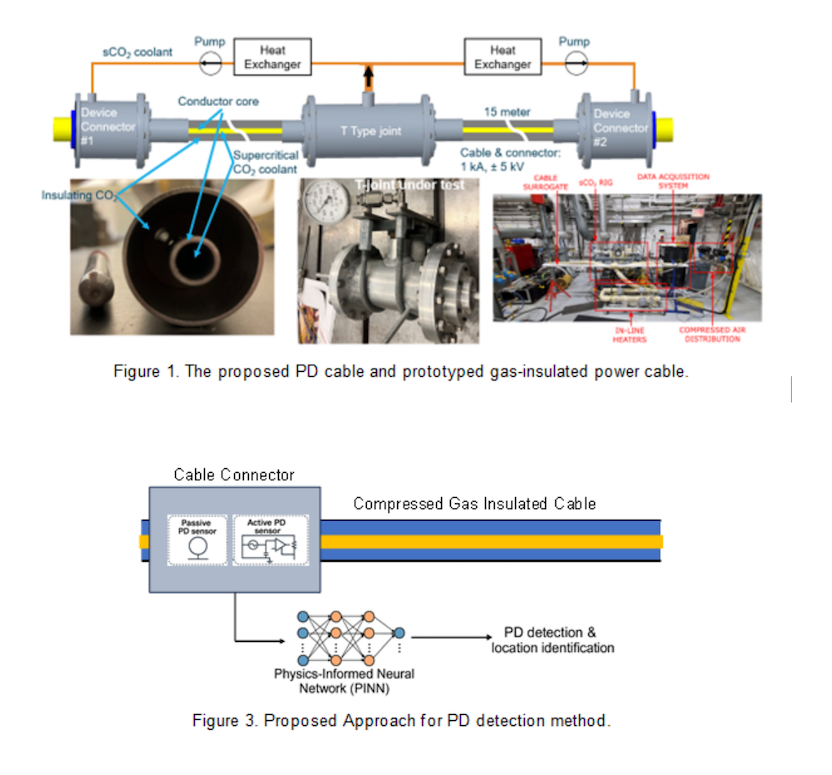
As aircraft systems evolve toward hybrid-electric propulsion, the demand for onboard power is rising fast—outpacing what today’s electrical architectures can safely support. Meeting that demand will require a shift to higher voltages. But there’s a catch: with higher voltage comes higher risk.
At altitude, one of the most critical and least forgiving threats is partial discharge: tiny electrical breakdowns that can quietly degrade insulation until a catastrophic failure occurs.
“The voltage levels used on aircraft today will soon be insufficient,” said Dr. Jin Wang, director of the High Voltage and Power Electronics Laboratory (HVPE) and professor at The Ohio State University. “But increasing voltage introduces new risks, especially partial discharge along cables and electrical components. Addressing that challenge is essential before higher-voltage systems can be safely deployed.”
A Smarter Way to Detect the Invisible
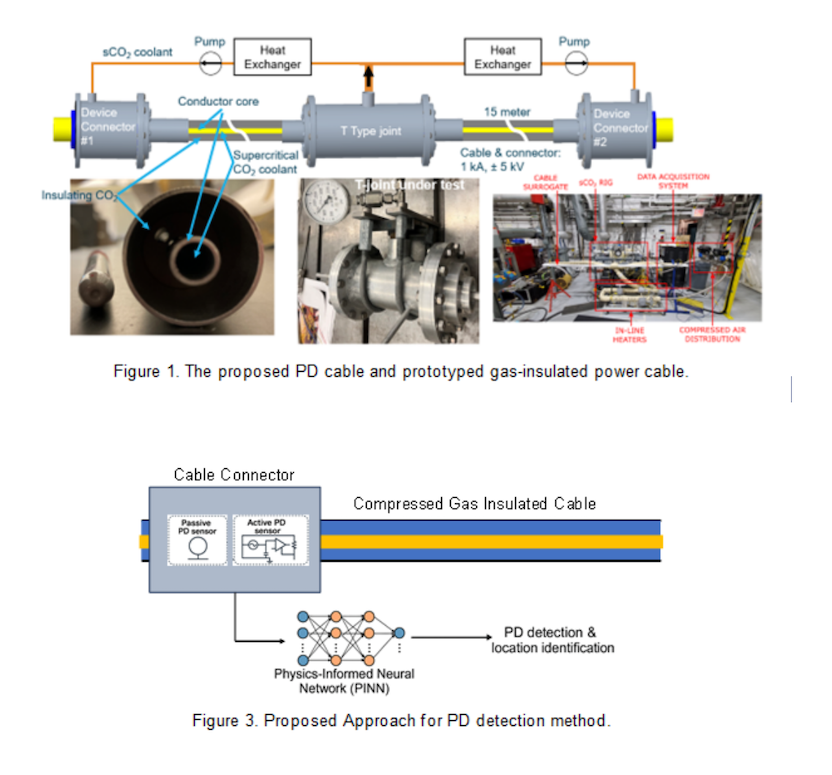
To tackle this problem, the Ohio State team is developing an integrated system that combines advanced sensing hardware with physics-informed artificial intelligence—a step change from traditional monitoring approaches. The project “Gas-insulated Cable with Integrated Partial Discharge Detection for Aerospace Systems” is funded by the Ohio Federal Research Network via Ohio Department of Higher Education budget.
The Ohio State team’s solution merges:
Active voltage injection
Passive signal measurement
A Physics-Informed Neural Network (PINN) trained on real physical behavior
This combination enables real-time detection and localization of partial discharge, giving operators insight into issues as they emerge—not after damage is done.
“Because these AI models are grounded in physics, they’re not just detecting anomalies—they’re interpreting them based on how partial discharge actually behaves,” Wang said.
The system’s high-bandwidth detection circuits feed signals into onboard microcontrollers, where the algorithms analyze them instantly, turning raw electrical noise into actionable intelligence.
Engineering for Extreme Environments
Detecting partial discharge in a lab is one thing. Doing it inside an aircraft is another. High-voltage systems in aerospace environments must withstand:
Wide temperature swings
High electromagnetic interference
Harsh operating conditions at altitude
These factors make reliable monitoring especially challenging—and essential.
What makes this project especially compelling is its immediate relevance beyond aerospace.
A newly launched ARPA-E initiative focused on high-voltage DC (HVDC) power stations is already benefiting from the OFRN-funded research.
“The requirements for insulation design and partial discharge prevention in the ARPA-E project closely mirror the challenges we’re addressing here,” Wang said.
Even though HVDC systems operate at different voltage levels, the core detection techniques and algorithms translate directly across applications—from aircraft cables to grid-scale infrastructure.
That portability is powerful. It means the same innovations enabling safer electric flight could also:
Improve reliability in power grids
Support next-generation HVDC systems
Strengthen critical energy infrastructure
Preventing Failure Before It Starts
Beyond detection, the system is designed for early warning—identifying insulation degradation before it becomes a failure event. By catching issues sooner, operators can shift from reactive maintenance to predictive and preventative strategies, reducing risk and downtime.
And the implications don’t stop at aviation or the grid.
As power demands surge across industries, similar challenges are emerging elsewhere, especially in data centers, where new architectures are moving toward 800-V DC distribution.
“The same technologies can be adapted to improve reliability in these high-power systems,” Wang said, pointing to collaborations with industry partners like Vertiv.
From Research to Real-World Impact
With strong partnerships across academia and industry, including GE Research and emerging collaborations in energy systems, the team is already focused on transition. Future pathways include:
Integration into aircraft power systems
Deployment in HVDC infrastructure via ARPA-E
Application in next-generation data centers
The Bigger Picture
At its core, this work is about more than cables or sensors. It’s about enabling the next generation of electrified systems—safely, reliably, and at scale.
By solving one of the most fundamental barriers to high-voltage adoption, the Ohio State team is helping unlock a future where innovations in aerospace, energy, and digital infrastructure are not just possible—but practical.
###
About Ohio Federal Research Network (OFRN)
The Ohio Federal Research Network (OFRN) has the mission to stimulate Ohio’s innovation economy by building statewide university-industry research collaborations that meet the requirements of Ohio’s federal laboratories, resulting in the creation of technologies that drive job growth for the State of Ohio. The OFRN is a program managed by Parallax Advanced Research in collaboration with The Ohio State University and is funded by the Ohio Department of Higher Education.
About Parallax Advanced Research and the Ohio Aerospace Institute (OAI)
Parallax Advanced Research is a research institute that tackles global challenges through strategic partnerships with government, industry, and academia. It accelerates innovation, addresses critical global issues, and develops groundbreaking ideas with its partners. With offices in Ohio and Virginia, Parallax aims to deliver new solutions and speed them to market. In 2023, Parallax and the Ohio Aerospace Institute (OAI) formed a collaborative affiliation to drive innovation and technological advancements in Ohio and for the nation. The Ohio Aerospace Institute plays a pivotal role in advancing the aerospace industry in Ohio and the nation by fostering collaborations between universities, aerospace industries, and government organizations, and managing aerospace research, education, and workforce development projects.