A University of Akron-led research project originally designed to improve aerospace systems testing is creating new opportunities in power grid modernization, data centers and electric aircraft — while preparing the next generation of Ohio engineers.
Supported through Round 6 of the Ohio Federal Research Network, the High Bandwidth Light Weight Modular GaN-Based Utility Interactive DC Emulator project brought together the University of Akron, Case Western Reserve University, PC Krause and Associates, the Air Force Research Laboratory and NASA Glenn Research Center. The project ran from October 2023 through April 2025.
The team developed a compact, scalable direct current emulator that can function as both a programmable power source and an electrical load. The technology allows engineers to test how components will perform within a larger electrical system, even when some of those components are unavailable or have not yet been built.
“Integrating subsystem components early in the development process allows for efficient detection and correction of destabilizing interactions,” said Yilmaz Sozer, the project’s principal investigator at the University of Akron.
Testing complex systems earlier
As aircraft, spacecraft, vehicles and power systems become increasingly electrified, engineers must understand how individual components will interact under normal and changing operating conditions. Waiting until every piece of hardware is available can delay testing and make problems more expensive to correct.
Hardware-in-the-loop testing offers another approach. It combines physical equipment with real-time digital models, allowing an emulator to reproduce the behavior of a missing component. Engineers can then evaluate system interactions, stability and performance earlier in the development process.
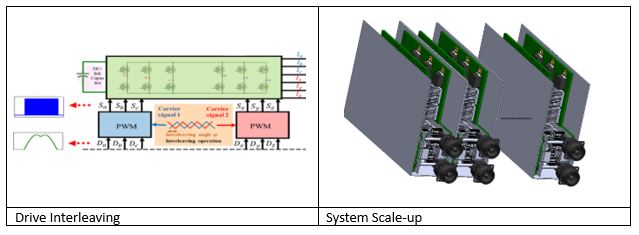
To support these experiments, the research team developed a modular, bidirectional DC emulator using gallium nitride, or GaN, semiconductor technology. Its parallel-interleaved, dual-active-bridge converter design provides the high bandwidth needed to respond quickly and accurately to commands from a real-time model.
Because the design is modular, individual building blocks can be combined in different series and parallel configurations to meet the voltage and power requirements of various applications.
One of the team’s primary technical challenges was obtaining representative load profiles for specific systems. Those profiles were critical to establishing the emulator’s performance requirements but were not always available to researchers.
With guidance from the project’s federal and industry partners, the team developed demanding but representative load profiles that could demonstrate the system’s performance without relying on restricted or application-specific information.
The collaboration allowed each organization to contribute specialized expertise. AFRL and NASA Glenn helped connect the research to federal technology needs. PC Krause and Associates contributed system-level development experience, while researchers at the University of Akron and Case Western Reserve University advanced the converter, control and emulation technologies.
“The challenges are brought to the attention of AFRL, the company has great expertise in system-level development, and the university has the technology to push the limits of the research,” Sozer said. “It was a great team-up.”
From aerospace laboratories to the power grid
Although the project began with aerospace hardware-in-the-loop applications in mind, the technology and expertise developed through the research could address challenges in several rapidly growing markets.
The expansion of artificial intelligence and data centers is placing greater demands on the nation’s electrical infrastructure. Data centers require power conversion systems capable of managing large and rapidly changing loads, creating a potential application for the technologies developed through the OFRN project.
The work could also support power grid modernization and the development of lightweight electric motor drive systems for unmanned aerial vehicles and other advanced aircraft.
For aerospace researchers, the emulator offers a way to test aircraft electrical systems in real time without requiring access to a complete aircraft or every physical subsystem.
“The ability to emulate the electrical systems of aircraft or aerospace systems without having the actual system is a great benefit,” Sozer said.
Since the project concluded, the team’s newly developed expertise has helped researchers secure follow-on grants focused on power grid challenges. The researchers have also formed a startup company and are working with the University of Akron’s technology transfer office to advance the technology and explore commercialization opportunities.
Developing and retaining Ohio engineering talent
Sozer said the project’s most important outcome is its contribution to workforce development.
Students gained hands-on experience in advanced power electronics while working alongside academic, industry and federal researchers. Several have since graduated and taken engineering positions in Northeast Ohio, while others are continuing their education at Ohio universities.
Samuel Dauterman earned his bachelor’s degree from the University of Akron, began a master’s program and joined GPD Group in Akron as an engineer. Eric Arce graduated and became an automation engineer at Norman Noble Inc. in Highland Heights. Noah Jones joined TEST-FUCHS in Brecksville as an electrical design engineer.
Nathaniel Rohr is pursuing a master’s degree in electrical and computer engineering at the University of Akron. Alper Uzum, Syed Hasan, Ken Chen, Mano Weaver, Orhan Ozguler, Burak Yalvac, Karungi Kabaseke and Chungyang Chu are continuing their education at the University of Akron or Case Western Reserve University while contributing to related laboratory research.
“The number one outcome for the project is workforce development,” Sozer said. “It enables the development of local talent and the workforce for Ohio.”
The project demonstrates how OFRN connects Ohio universities and companies with federal research organizations to address mission-driven technology needs. According to Sozer, OFRN’s structure provided the funding, partnerships and continued support needed to bring the research team together.
“It is an excellent way of bringing federal laboratories, industry and university research together,” he said. “OFRN’s primary focus is the success of the project, and they are there at every step to help you succeed.”
What began as an effort to improve aerospace systems testing is now supporting follow-on research, potential commercialization and engineering careers across Ohio — extending the project’s impact beyond its original period of performance.
###
About Ohio Federal Research Network (OFRN)
The Ohio Federal Research Network (OFRN) has the mission to stimulate Ohio’s innovation economy by building statewide university-industry research collaborations that meet the requirements of Ohio’s federal laboratories, resulting in the creation of technologies that drive job growth for the State of Ohio. The OFRN is a program managed by Parallax Advanced Research in collaboration with The Ohio State University and is funded by the Ohio Department of Higher Education.
About Parallax Advanced Research and the Ohio Aerospace Institute (OAI)
Parallax Advanced Research is a research institute that tackles global challenges through strategic partnerships with government, industry, and academia. It accelerates innovation, addresses critical global issues, and develops groundbreaking ideas with its partners. With offices in Ohio and Virginia, Parallax aims to deliver new solutions and speed them to market. In 2023, Parallax and the Ohio Aerospace Institute (OAI) formed a collaborative affiliation to drive innovation and technological advancements in Ohio and for the nation. The Ohio Aerospace Institute plays a pivotal role in advancing the aerospace industry in Ohio and the nation by fostering collaborations between universities, aerospace industries, and government organizations, and managing aerospace research, education, and workforce development projects.