

Nate Steffen: Advancing Space Robotics Through Explainable AI — Strengthened by OFRN’s Research Ecosystem
OFRN Workforce Development Success Story
When Ohio Space Grant Consortium (OSGC) Fellow Nate Steffen (2024–25) joined the University of Cincinnati’s AI Bio Lab, he entered a uniquely collaborative research environment—one in which multiple Ohio Federal Research Network (OFRN)-funded projects were underway, exposing students to real-world defense and aerospace challenges. Although Steffen was not directly funded through OFRN, he benefited significantly from the lab’s OFRN-supported research activity, which shaped the technical ecosystem in which he trained alongside three other standout students featured in the UC success portfolio. Both OSGC and OFRN are programs managed by Parallax Advanced Research, the former in collaboration with the Ohio Aerospace Institute, and the latter in collaboration with The Ohio State University.

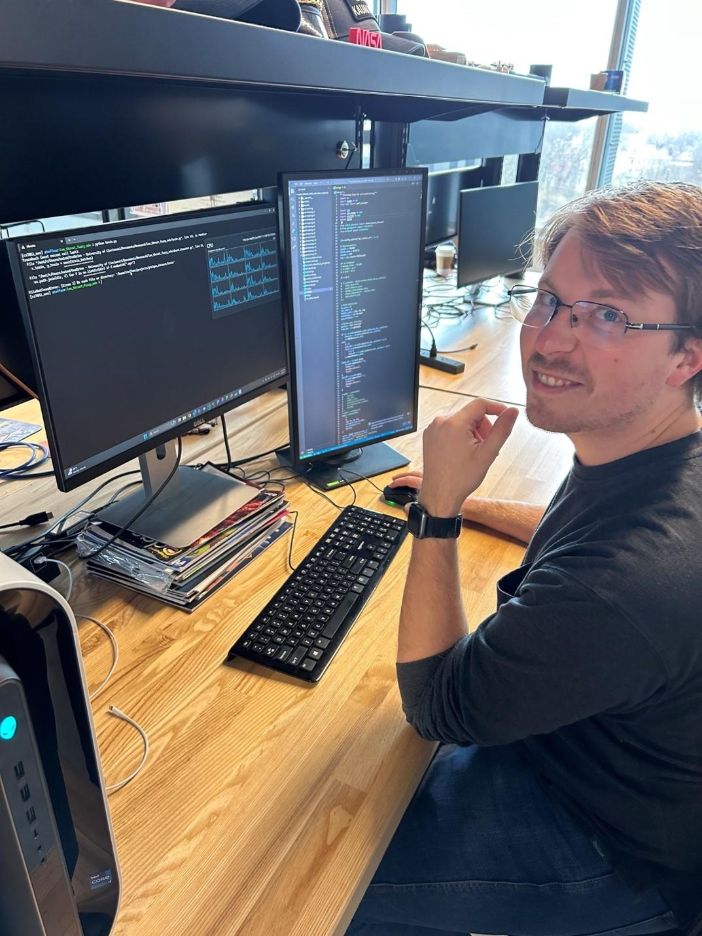
Caption: NASA Glenn Pathways Intern & PhD Candidate at the University of Cincinnati, Nate Steffen
This high-level research environment helped accelerate Steffen’s development in space robotics and explainable fuzzy-logic–based AI. In summer 2025, he earned Best Student Paper at an international robotics and AI conference in Banff, Canada, for his publication:
Download the paper here.
The paper—an advanced study in trusted autonomy—demonstrated that Steffen’s hybrid Genetic Fuzzy + LQR controller achieved:
18.5% improved performance over optimal LQR
100% success rate under uncertainty
according to simulation results documented in his paper.
Steffen is also part of the NASA Glenn Pathways Program, guaranteeing him a federal position upon completion of his graduate studies. His journey reflects the core vision of OFRN: building an Ohio-grown aerospace workforce equipped to transition seamlessly into NASA, DoD, and major industry roles.
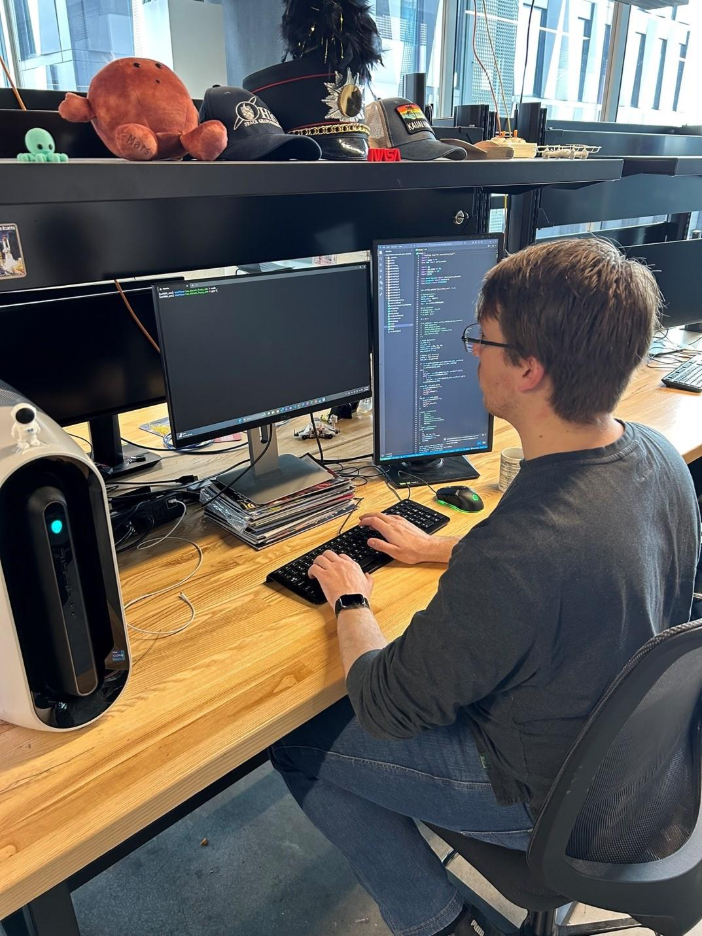
“Working in a lab with an active OFRN project gave me exposure to the same types of challenges NASA and the DoD are facing right now,” Steffen said. “It pushed me to think beyond the classroom—about robustness, uncertainty, and how to design AI systems people can actually trust.”
“I don’t think my research would have advanced as quickly without that environment,” he said. “Being surrounded by projects tied to real federal mission needs helped me see how my work in space robotics fits into the bigger aerospace ecosystem.”
Maj. Gen. (Ret.) Mark Bartman, Executive Director of the Ohio Federal Research Network, emphasized the importance of this ecosystem:
“This ecosystem is exactly how OFRN strengthens Ohio’s innovation workforce. By supporting multidisciplinary labs where students gain hands-on experience with mission-aligned research—even when their own funding source differs,” said Bartman.
How OFRN Contributed to His Success
While Steffen’s fellowship funding came from OSGC, his day-to-day research environment was deeply shaped by the OFRN-funded Regional Unmanned Traffic Management System (RUTMS) project, which was running concurrently in the UC laboratory. RUTMS brought real-world challenges in autonomous flight safety, multi-agent coordination, and trusted decision-making into the lab—creating a rich ecosystem where Steffen worked side-by-side, applying fuzzy-logic AI, explainable autonomy, and advanced control techniques to problems directly aligned with state and federal mission needs.
“RUTMS influenced my Ph.D. mentor and enhanced the capabilities of our research lab at UC. Prof. Kelly Cohen, P.I. for RUTMS, exposed me to the complexity of real-world autonomous systems—far beyond simulated robotics,” Steffen said. “Seeing how explainable AI principles were being applied to unmanned traffic management helped me refine my own approach to making space robotics more transparent and reliable.”
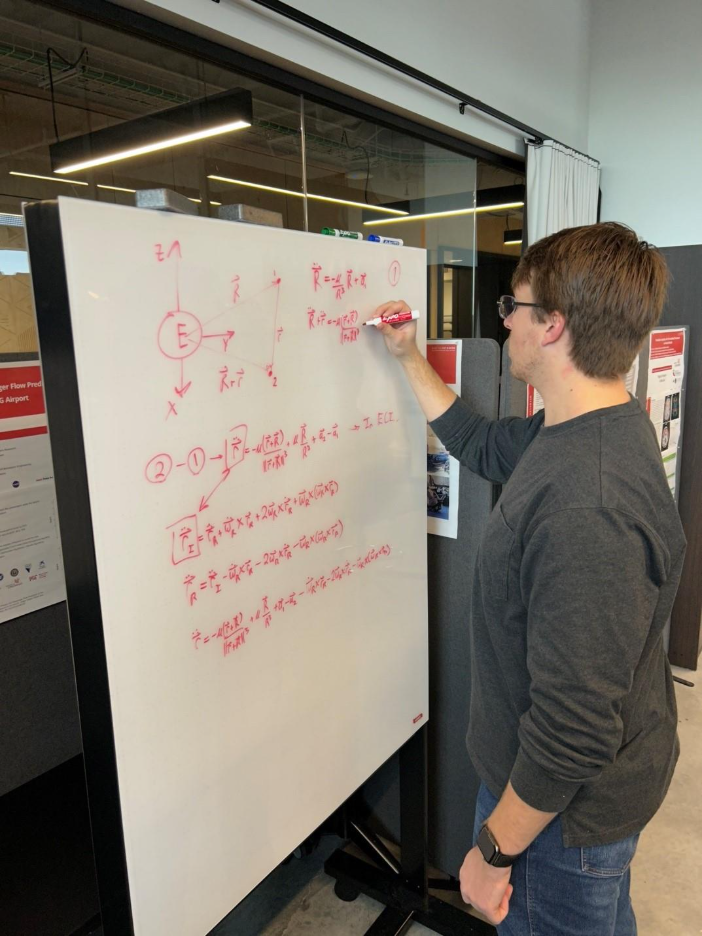
These OFRN projects provided:
Exposure to operationally relevant defense and aerospace use cases
Access to high-end modeling, autonomy, and verification tools
Opportunities to apply trusted AI techniques to real hypersonics, autonomy, and aerospace challenges
A collaborative mentoring pipeline that blended academia, federal labs, and industry partners
“It is imperative that we continue to fund and inspire our future, emphasizing how OSGC and OFRN-enabled environments help elevate the next generation of aerospace innovators,” said Prof. Kelly Cohen, Brian H. Rowe Endowed Chair in Aerospace Engineering, University of Cincinnati.
###
About Parallax Advanced Research & Ohio Aerospace Institute
Parallax Advanced Research is a research institute that tackles global challenges through strategic partnerships with government, industry, and academia. It accelerates innovation, addresses critical global issues, and develops groundbreaking ideas with its partners. With offices in Ohio and Virginia, Parallax aims to deliver new solutions and speed them to market. In 2023, Parallax and the Ohio Aerospace Institute (OAI) formed a collaborative affiliation to drive innovation and technological advancements in Ohio and for the Nation. OAI plays a pivotal role in advancing the aerospace industry in Ohio and the nation by fostering collaborations between universities, aerospace industries, and government organizations and managing aerospace research, education, and workforce development projects.
About the Ohio Federal Research Network
The Ohio Federal Research Network has the mission to stimulate Ohio’s innovation economy by building statewide university-industry research collaborations that meet the requirements of Ohio’s federal laboratories, resulting in the creation of technologies that drive job growth for the State of Ohio. The OFRN is a program managed by Parallax Advanced Research in collaboration with The Ohio State University and is funded by the Ohio Department of Higher Education.
About The Ohio Space Grant Consortium
The Ohio Space Grant Consortium (OSGC) was established in 1989 (along with the original Ohio 12-member universities) by the United States Congress and is part of the National Space Grant College and Fellowship Program known as “Space Grant” administered through the Office of STEM Engagement at NASA Headquarters. There are 52 consortia, one in each state, the District of Columbia, and the Commonwealth of Puerto Rico. Space Grant is a unique national network of colleges and universities working to expand opportunities for Americans to understand and participate in NASA’s aeronautics and space projects by supporting and enhancing Science, Technology, Engineering, and Mathematics (STEM) through scholarships, fellowships, higher education, research infrastructure, pre-college (K-12), and informal education public outreach efforts. The Space Grant national network includes over 1,000 affiliates from universities, colleges, industry, museums, science centers, and state and local agencies. The OSGC is currently composed of 26 institutions of higher learning (20 universities and 6 community colleges), NASA Glenn Research Center (GRC), the Air Force Research Laboratories (AFRL), and various education outreach partners. The OSGC Program Office is located at the Ohio Aerospace Institute (OAI) in Cleveland, Ohio.