OFRN & OSGC Workforce Development Success Story

For Dr. Lynn Pickering, aerospace engineering was never just about making systems smarter—it was about making them safer, more trustworthy, and accountable to the humans who rely on them. Today, as a Ph.D. in Aerospace Engineering and nationally recognized leader in explainable artificial intelligence, Pickering’s work sits at the intersection of autonomy, safety, and mission assurance—priority areas for both the Ohio Federal Research Network (OFRN) and the Ohio Space Grant Consortium (OSGC).
Pickering’s research focuses on interpretable machine learning using fuzzy rule-based models, an approach designed to ensure humans can understand—and override—AI decisions in high-risk environments such as aviation and spaceflight.
“In aerospace and autonomous systems, there is little room for error,” Pickering said. “One of the only ways we can use AI safely in these fields is if humans can understand its outputs and remain in control when something goes wrong.”
A Research Path Shaped by Mission-Driven Work
Although Pickering was supported through OSGC as both an Undergraduate Scholar and Graduate Fellow, her research trajectory was deeply shaped by training in the University of Cincinnati’s AI Bio Lab—helmed by Dr. Kelly Cohen, Brian H. Rowe Endowed Chair in Aerospace Engineering—during a period when OFRN-funded projects were actively underway. That environment, grounded in federal mission needs, proved transformational.

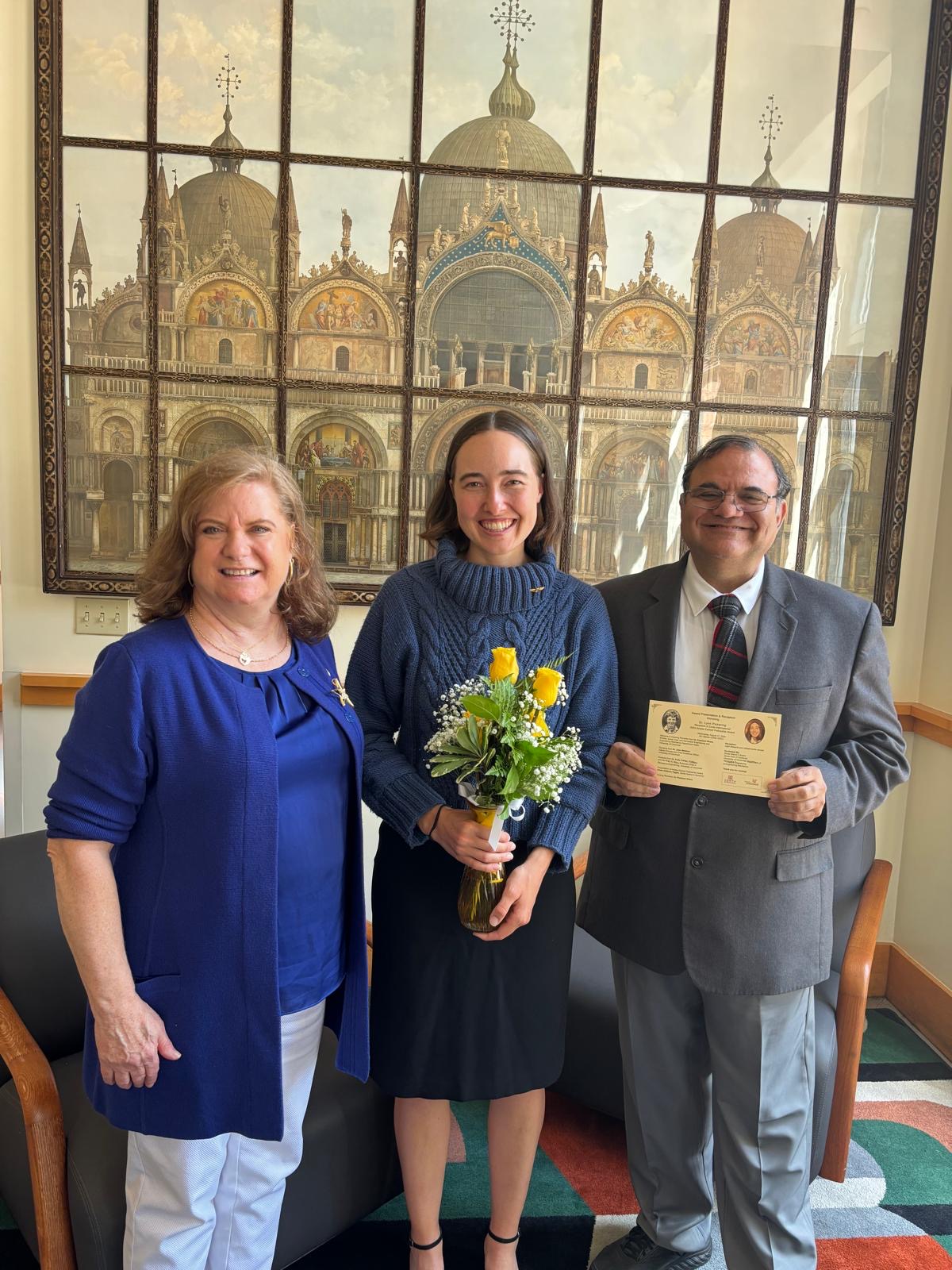
Caption: Pickering (center) and Cohen (right) at the Amelia Earhart award ceremony.

Caption: Pickering and Cohen at the Amelia Earhart award ceremony.
“Training in a lab where OFRN-funded projects were actively underway greatly influenced my research and professional growth,” Pickering said. “Without this environment, I would not have come to love research or gained the confidence to pursue becoming a researcher.”
Working alongside federally aligned efforts—particularly those tied to autonomy, verification, and safety—shifted her perspective on what impactful research looks like.
“Mission-driven research taught me to prioritize robustness and scalability over pure novelty,” Pickering said. “It forced me to ask: Is this sustainable? Is it effective in the field? Can people in high-risk domains trust it?”
These principles became the foundation of her dissertation and continue to guide her research agenda.
“Programs like OSGC and research ecosystems supported by OFRN don’t just fund projects—they shape researchers,” said Dr. Kelly Cohen, Brian H. Rowe Endowed Chair in Aerospace Engineering, University of Cincinnati. “They give students the confidence, context, and mission awareness needed to move from academic ideas to deployable solutions.”
National Recognition for Trusted AI Leadership
In 2025, Pickering’s work earned Best PhD Thesis Award in North America in fuzzy systems, one of the highest honors in the field. That same year, she was named a 2025 Amelia Earhart Fellow, a prestigious national award recognizing exceptional women in aerospace engineering and appeared on regional television highlighting her research and career path.
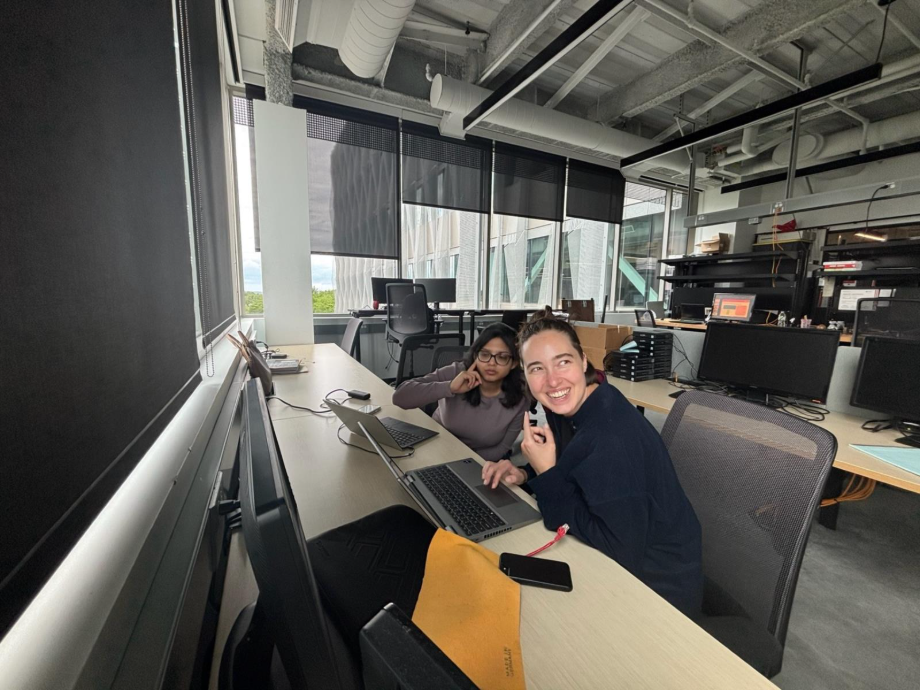
Caption: Pickering (right) and a fellow graduate student working in the lab.
“Receiving the Best PhD Thesis Award was incredibly meaningful,” Pickering said. “There were many long nights and doubts during my PhD, and this recognition validated not just the work—but the importance of doing AI the right way.”
Her achievements build on a record of national and international recognition, including a Fulbright Fellowship, Belgian American Educational Foundation Fellowship, and multiple leadership awards—all documented through OSGC-supported success pathways.
“Lynn exemplifies what happens when talented students are placed in a research environment that values rigor, responsibility, and real-world impact,” said Cohen. “Her work in explainable fuzzy AI shows that cutting-edge research doesn’t have to come at the expense of safety or trust—and that mindset is exactly what aerospace and defense missions demand.”
Strengthening the Ohio-Grown Aerospace Workforce
Pickering is unapologetically proud to be part of Ohio’s aerospace talent pipeline.
“I’m incredibly proud to be part of an Ohio-grown aerospace workforce,” she said. “As a high school senior, I never imagined the opportunities that staying in Ohio would open for me.”
Her experience is an example of how OSGC fellowships and OFRN-enabled research ecosystems work together—not only to support individual students, but to cultivate labs and communities where future NASA, AFRL, DoD, and industry leaders are trained.
“Without research ecosystems like those supported by OFRN, I would have graduated with a bachelor’s degree never knowing how much I loved research,” Pickering said. “I owe my research career to the mentorship, the lab environment, and the investment in students.”
“OFRN is about building ecosystems, not silos,” said Maj. Gen. (Ret.) Mark Bartman, Executive Director, OFRN. “By aligning university research with real defense and aerospace needs, we help develop talent that is ready to contribute on day one—exactly as Lynn has done.”
“When OSGC fellowships intersect with research ecosystems like those supported by OFRN, the result is a powerful workforce pipeline,” said Tim Hale, Program Manager, OSGC. “Lynn’s story demonstrates how Ohio continues to develop nationally competitive aerospace talent.”
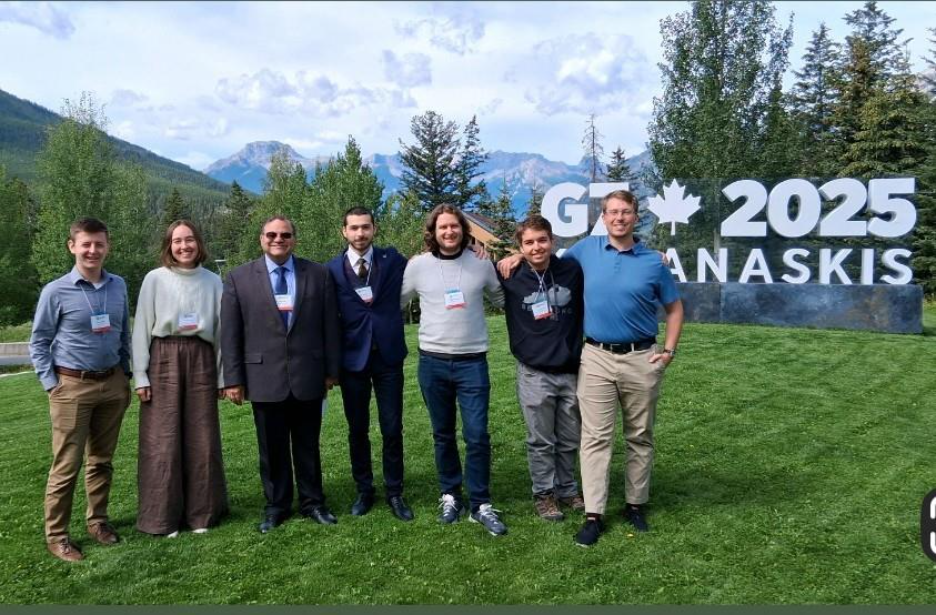
Caption: UC PhD students at the NAFIPS Annual Meeting
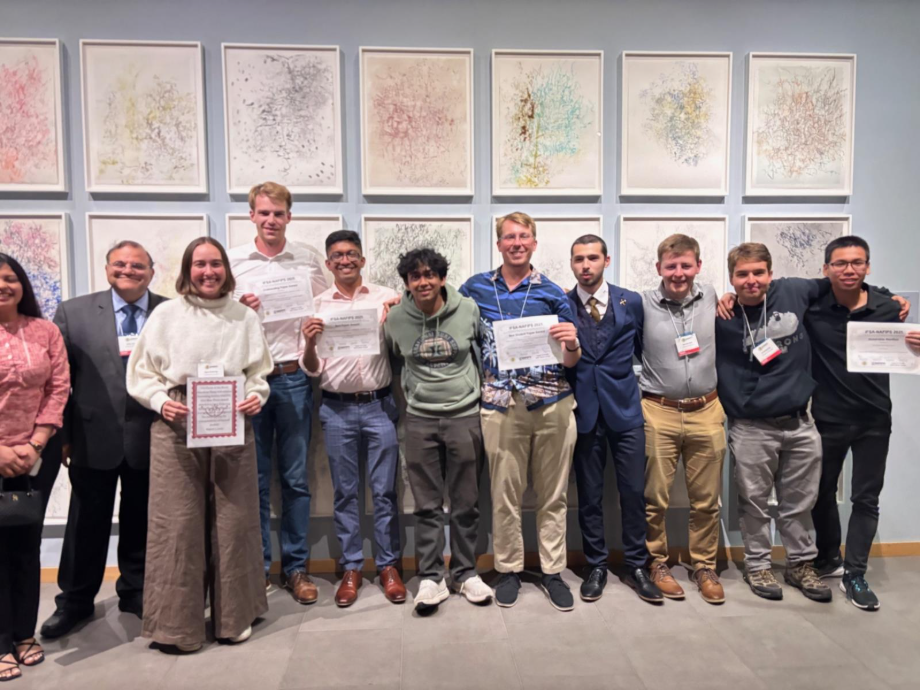
Caption: UC PhD students at the NAFIPS Annual Meeting
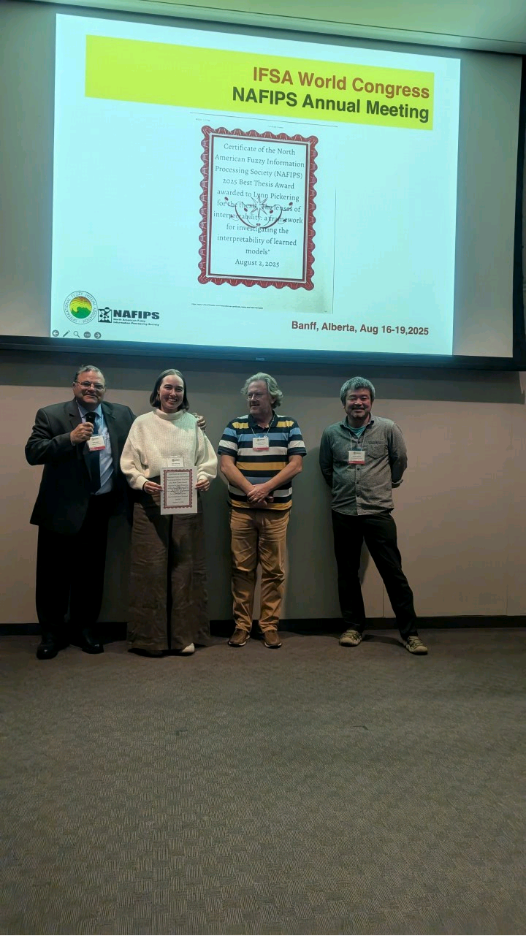
Caption: UC PhD students at the NAFIPS Annual Meeting
From Discovery to Deployment
Asked to summarize the value of training in an OFRN-enabled research environment, Pickering offered a response that captures the heart of OFRN’s mission:
“The true value lies in learning to bridge the gap between theoretical potential and operational reality—teaching researchers not just how to discover science, but how to deliver deployable solutions for national needs.”
Caption: Pickering (center) & Cohen (right) at the PhD awards recognition ceremony.
Her story underscores the broader impact of OFRN and OSGC investments: not just producing research, but building a resilient, mission-ready workforce equipped to deliver trustworthy technologies where they matter most.
“Lynn’s success is a powerful example of OFRN’s broader workforce impact,” said Bartman. “Even when students are not directly funded by OFRN, training in labs where OFRN projects are underway exposes them to the mission-driven mindset required by our federal partners.”
“OSGC exists to spark curiosity and open doors for students, and Lynn’s journey shows what’s possible when that spark is supported by strong mentorship and aligned research environments,” said Hale. “Her achievements reflect the long-term value of investing in students early and surrounding them with opportunities to grow.”
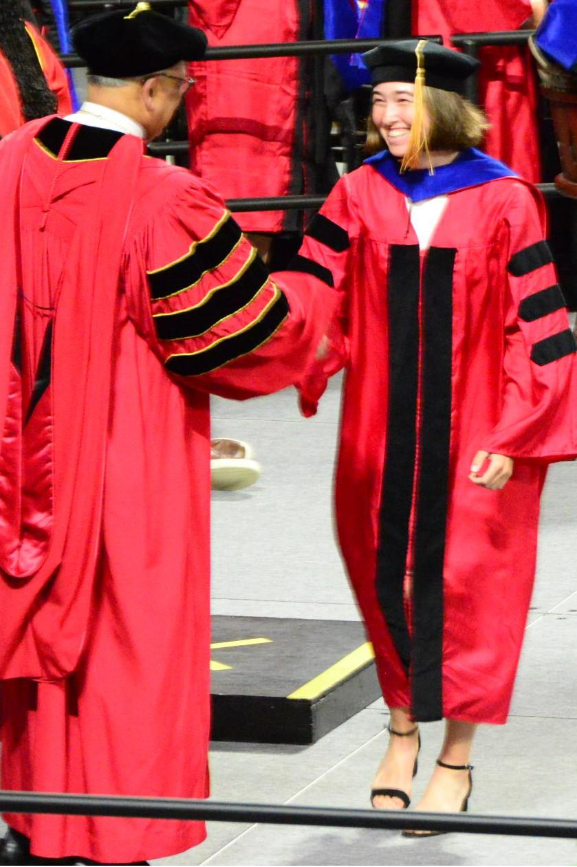
Caption: Pickering at her PhD graduation ceremony.
###
About Parallax Advanced Research & Ohio Aerospace Institute
Parallax Advanced Research is a research institute that tackles global challenges through strategic partnerships with government, industry, and academia. It accelerates innovation, addresses critical global issues, and develops groundbreaking ideas with its partners. With offices in Ohio and Virginia, Parallax aims to deliver new solutions and speed them to market. In 2023, Parallax and the Ohio Aerospace Institute (OAI) formed a collaborative affiliation to drive innovation and technological advancements in Ohio and for the Nation. OAI plays a pivotal role in advancing the aerospace industry in Ohio and the nation by fostering collaborations between universities, aerospace industries, and government organizations and managing aerospace research, education, and workforce development projects.
About the Ohio Federal Research Network
The Ohio Federal Research Network has the mission to stimulate Ohio’s innovation economy by building statewide university-industry research collaborations that meet the requirements of Ohio’s federal laboratories, resulting in the creation of technologies that drive job growth for the State of Ohio. The OFRN is a program managed by Parallax Advanced Research in collaboration with The Ohio State University and is funded by the Ohio Department of Higher Education.
About The Ohio Space Grant Consortium
The Ohio Space Grant Consortium (OSGC) was established in 1989 (along with the original Ohio 12-member universities) by the United States Congress and is part of the National Space Grant College and Fellowship Program known as “Space Grant” administered through the Office of STEM Engagement at NASA Headquarters. There are 52 consortia, one in each state, the District of Columbia, and the Commonwealth of Puerto Rico. Space Grant is a unique national network of colleges and universities working to expand opportunities for Americans to understand and participate in NASA’s aeronautics and space projects by supporting and enhancing Science, Technology, Engineering, and Mathematics (STEM) through scholarships, fellowships, higher education, research infrastructure, pre-college (K-12), and informal education public outreach efforts. The Space Grant national network includes over 1,000 affiliates from universities, colleges, industry, museums, science centers, and state and local agencies. The OSGC is currently composed of 26 institutions of higher learning (20 universities and 6 community colleges), NASA Glenn Research Center (GRC), the Air Force Research Laboratories (AFRL), and various education outreach partners. The OSGC Program Office is located at the Ohio Aerospace Institute (OAI) in Cleveland, Ohio.